
Hi Everyone 👋
I have found myself using Waymo more often for short trips. You get in, realize there is nobody else inside, and suddenly the car pulls into traffic. The first few times it feels instinctively wrong to be in a moving car with nobody in the driver’s seat. Then, after several minutes, the strangeness fades and the experience becomes one of consistency. The car is a familiar brand. I can set my own music and temperature. The ride tends to feel the same. There is no uncertainty around the driver, the vehicle, the conversation, or the condition of the back seat.
For most of the past twenty years, technology has improved daily life through screens and software. Smartphones made instant communication accessible, files became available from anywhere through the cloud, and Zoom allowed us to meet virtually across the world. These have all been meaningful improvements to how we live and work, but most are mediated through devices we control. We type, swipe, click, and tap while software works in the background. We are still outside the system.
Autonomous vehicles feel different because we are physically inside the system. That may be the more important inflection point. Humans are beginning to place greater physical trust in machine judgment.
A bad Zoom call is frustrating. A laptop freezing mid-presentation is inconvenient. Letting a machine make decisions while physically transporting us at 50 miles per hour on a busy road is a different category of risk.
Autonomous vehicles are one of the first broadly accessible consumer experiences that move technology into the physical world with real downside consequences. Driving involves judging distance, timing, speed, attention, reaction, and anticipation. These are activities we tend to view as deeply human. We are used to the idea that nearly every physical mode of transportation has a human who can intervene if something goes wrong.
As venture capital investors, our focus is finding inflection points within technologies and industries. In the case of Waymo and other autonomous vehicles, one of the important inflections is behavioral.
As people become more comfortable trusting machines with physical safety, the opportunity set expands beyond the original use case. We believe autonomous vehicles may become a trust bridge for other forms of physical automation.
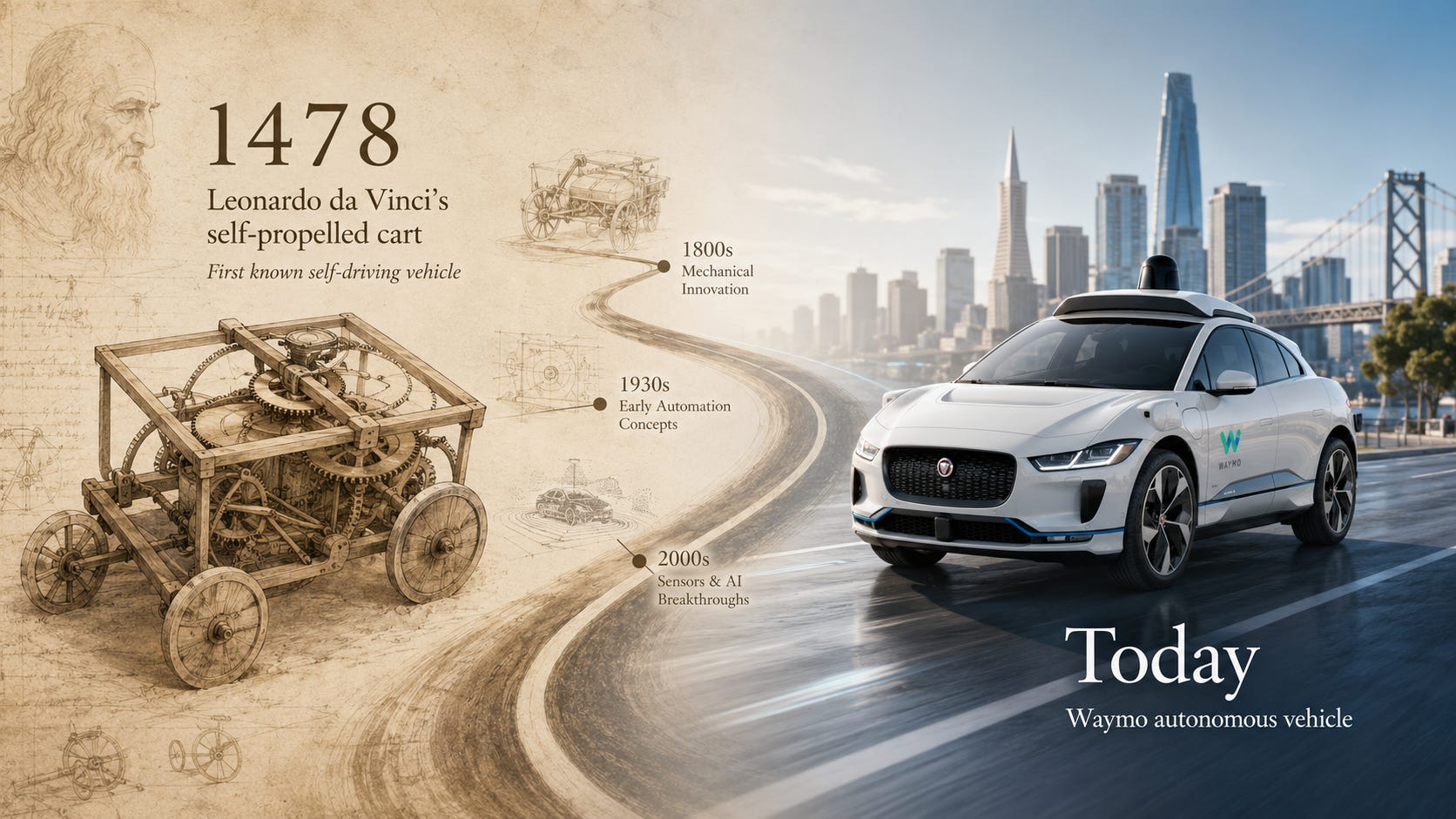
Initially it felt strange to have someone we did not know drive us around in their personal vehicle. Over time Uber became one of the primary ways people move through cities. Autonomous vehicles may represent the next step in our technological progress and adaptation.
Inflection Points
Physical trust in machine judgment. Consumers begin trusting software-controlled systems with physical safety and real-world consequences.
Consistency as adoption catalyst. Autonomous systems gain acceptance as they deliver cleaner, quieter, more predictable experiences than human-mediated alternatives.
Expansion beyond transportation. Comfort with autonomous vehicles may lower adoption barriers for robotics and increased physical automation in other areas of daily life.
Trust infrastructure. As machines operate in more physical environments, new company formation may emerge around monitoring, safety validation, compliance, insurance, maintenance, and human-machine interaction.
Waymo may be a different way to get around a city, but we believe it’s also an early signal of something larger: our trust in technology is becoming physical.
Thanks for reading,
-Eric.