
Happy Thursday,
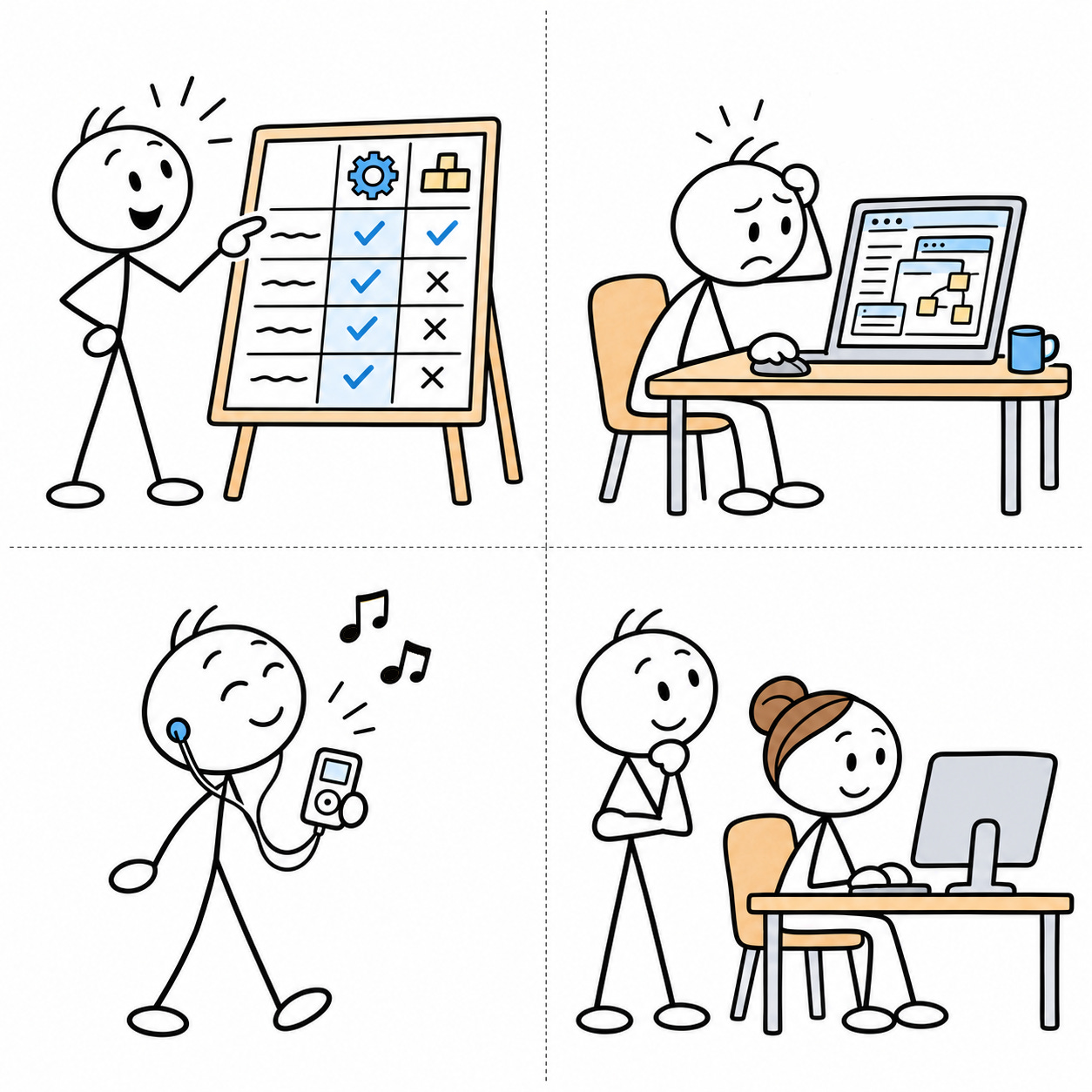
We have watched several companies spend considerable amounts of money implementing sophisticated software with the goal of improving reporting, automating processes, or increasing productivity. The initial demonstrations are often impressive, with long lists of capabilities and promised efficiency gains. Yet a few months after the system goes live, employees are back exporting data into spreadsheets or combining the new platform with their old way of working.
The software may perform exactly as promised, yet the people using it find the interface cumbersome or the workflow too restrictive. A familiar spreadsheet may be less sophisticated, but it still gets the report finished on time. Training and implementation can contribute to the problem, but these experiences raise a larger question about whether the technology fits the way people actually do their jobs.
We encounter a similar challenge when evaluating startup investments. Founders are skilled at explaining why their products are faster, more sophisticated, or capable of doing things competing products cannot. Yet the market does not always respond as expected, and sometimes a less impressive alternative attracts more customers. It brings us back to a question we have been thinking about for a while: what makes one product better than another?
The Customer’s Definition of Better
Apple’s original iPod is a familiar example of how customers can define the idea of better differently from the people developing the technology. The iPod was not the first digital music player, and some competing devices offered more features. What it did have was an intuitive way to navigate a music library with its scroll wheel, along with the ability to synchronize songs automatically with a computer.
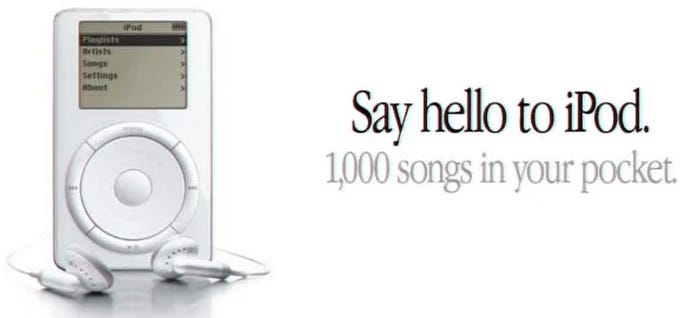
When Apple introduced the iPod, the description was not a complicated list of technical specifications. Instead, it was a promise of putting 1,000 songs in your pocket. The iPod was technically innovative, but the important achievement was making that technology easier for people to enjoy. Customers could focus on finding and listening to music rather than learning how to manage a new device. Its appeal illustrates why a product can succeed by making the overall experience better, even when other products offer additional capabilities.
The Experience Behind the Features
At a recent event, one participant in a panel discussion about technology adoption offered a simple way to think about customer experience. People either love a product, tolerate it, or hate it. His view was that companies able to move most of their customers into the first group stand a better chance of succeeding.
It is an intuitive framework rather than a scientific metric for predicting success, but it highlights something that can get overlooked during product development. The user interface is where the technology meets the person using it. That interaction can make an impressive capability useful in someone’s daily work or turn it into one more obstacle to getting the job done.
Fred Davis examined this issue in a 1989 paper that helped establish the Technology Acceptance Model. His research evaluated two factors: perceived usefulness, or whether people believe a system will improve their work, and perceived ease of use, or how much effort someone expects the system to require. Both were associated with technology usage, although perceived usefulness showed the stronger relationship. The research is not implying that simple products always win. Instead, it suggests that what users believe a product will do for them matters alongside how difficult it is to use.
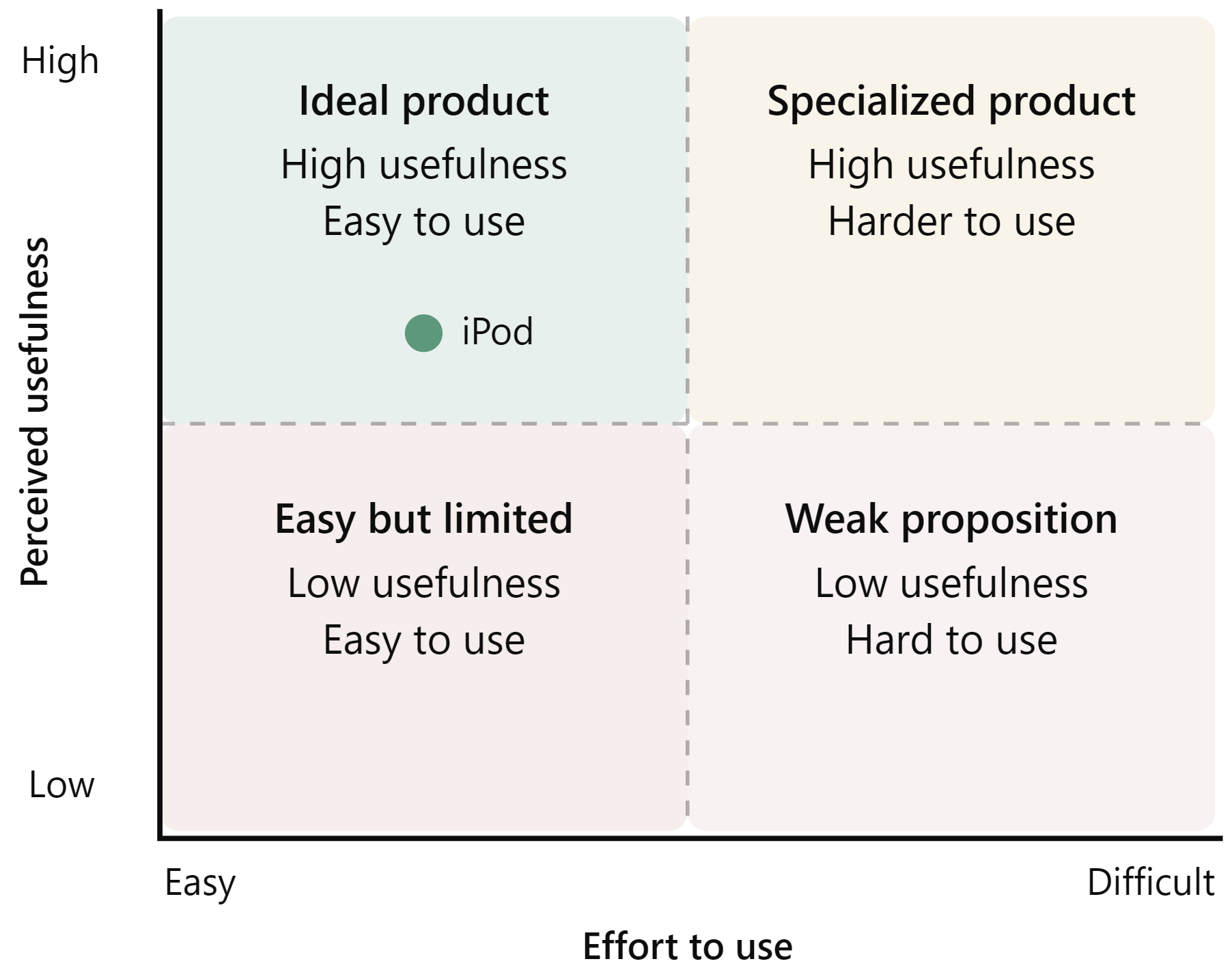
The chart above illustrates these two dimensions, with our example iPod placed in the high usefulness, easy-to-use box. Davis’s research suggests a helpful question for founders: how much meaningful value can customers get from the startup’s technology, and how easily can they get that value?
The Comparison Table
Most startup pitch decks include a competitive comparison slide. The familiar table lists competing products or companies across the top and features down the side, followed by a collection of checkmarks. Somehow, the startup presenting the pitch deck almost always comes out ahead.
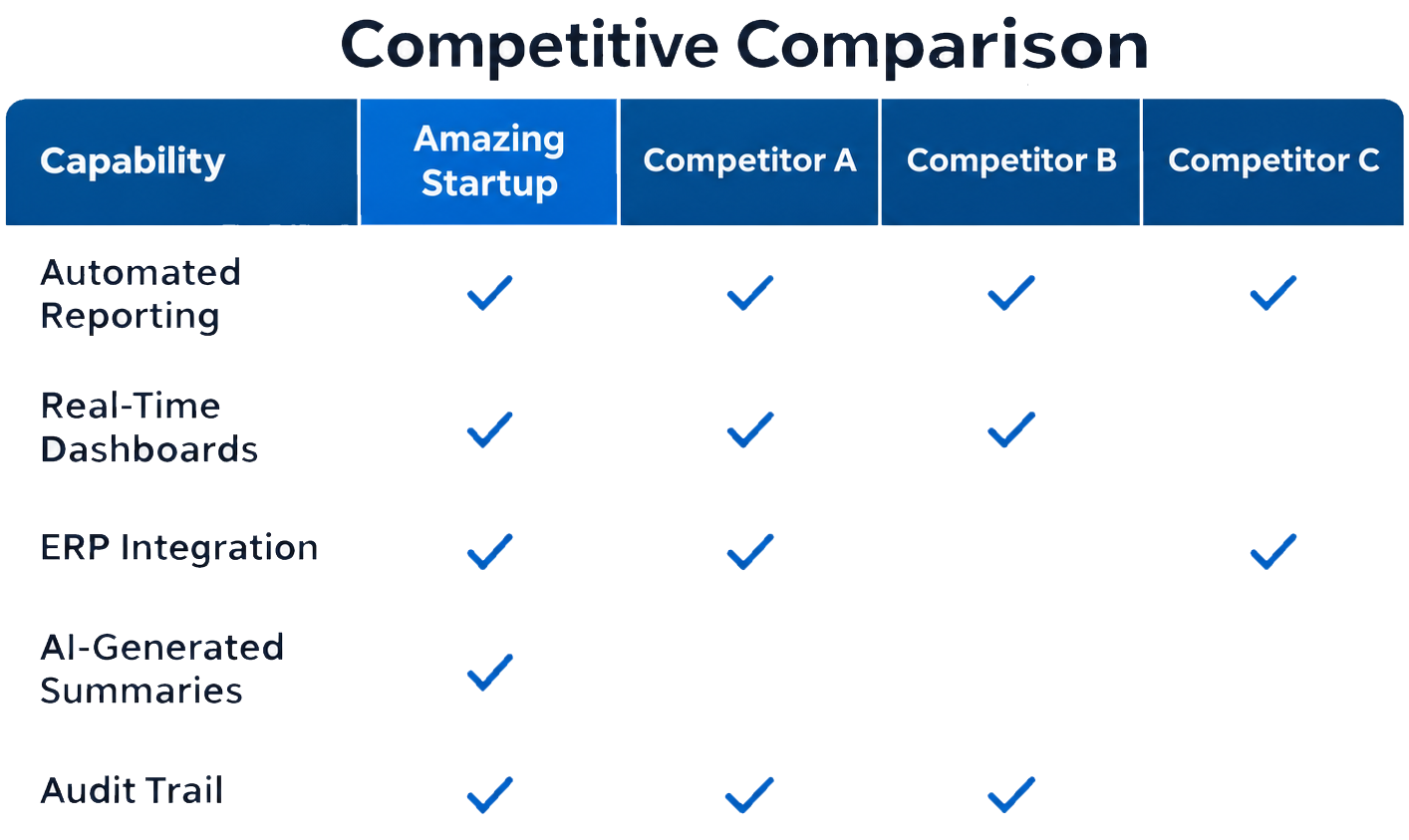
The table can be useful in showing what the startup has built and where its technology differs. But the founder also chooses the categories being compared, which naturally tend to favor the startup’s strengths. A long row of checkmarks may demonstrate technical differentiation without telling us whether those differences matter to customers.
As investors, we sometimes wonder if startups spend too much time asking whether their product is better than its competitors and not enough time asking whether it is better for the customer. What if a second comparison focused on the customer experience of using each product? A founder could ask customers to perform the same task using competing solutions, observe where they struggle, compare the time required, and learn which option customers choose to keep using. Even a small number of observed sessions or customer conversations could reveal something a feature list misses. The example table below show the difference in approach, actual ratings would need to come from customers rather than the founder assigning the highest score to the startup.
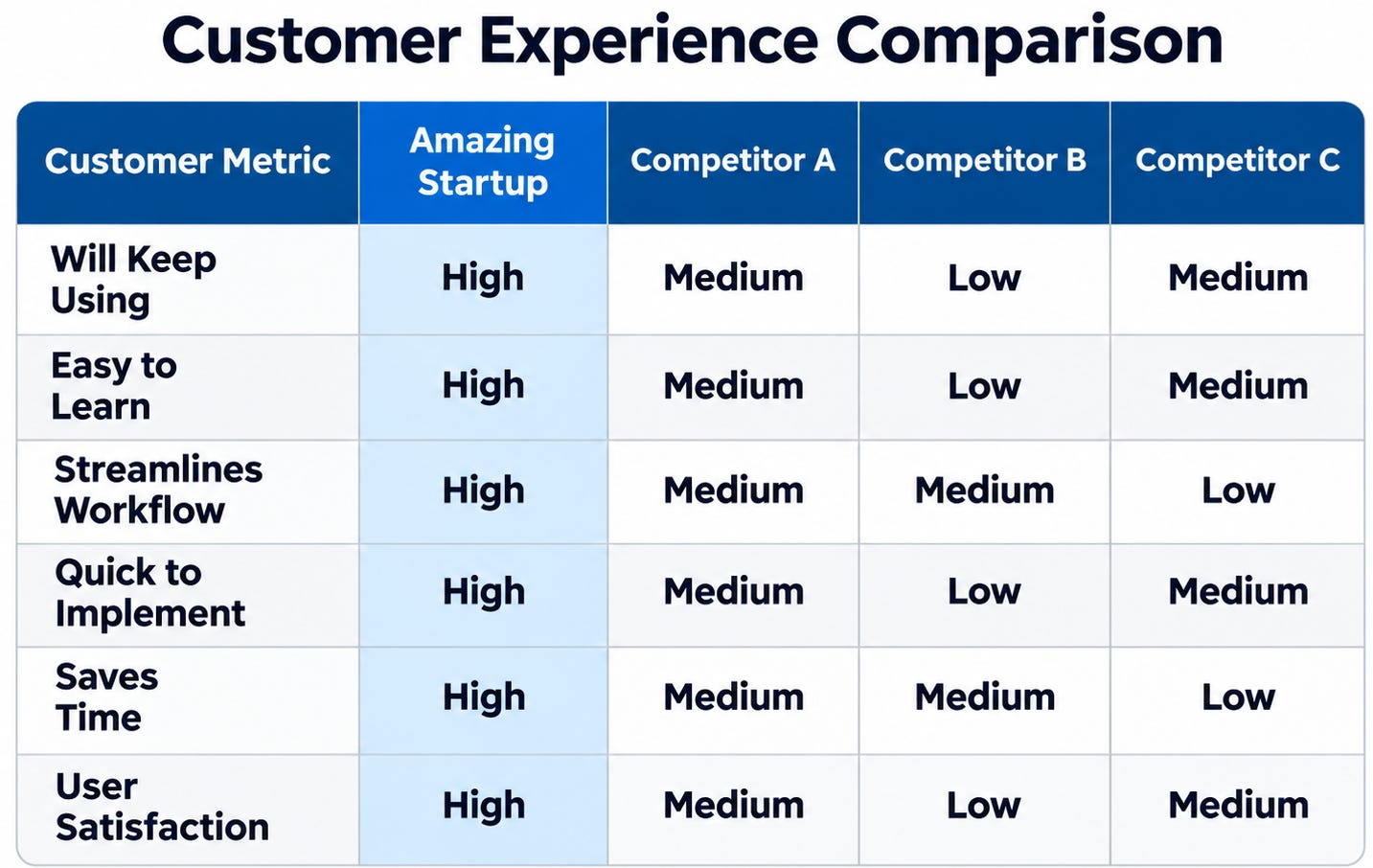
We realize in reality a startup is not able to ask these detailed questions of customers. Larger companies get close to doing this through focus groups, but even those are in controlled environments and may not always produce great results. Our goal is not to add another hypothetical table to a startup pitch deck, but instead to suggest why it might be important to consider how customers experience the available alternatives, rather than evaluating products solely by their capabilities.
Sometimes a customer may also be comparing the new product with a solution that never appears on the founder’s competitive slide. Research by William Samuelson and Richard Zeckhauser documented status quo bias, a tendency to favor existing choices. It helps explain why a familiar spreadsheet can remain attractive even when a new system offers more capabilities. Customers weigh the benefits of switching against the effort and uncertainty of changing an established routine. The customer’s current way of working should be considered a strong competitor to a startup’s product or solution.
When the Market Decides
As early-stage investors, we want to understand what a product can do and whether the underlying technology gives the company a meaningful advantage. A strong team, compelling demonstration, or new way of solving a problem can persuade us to begin investment diligence. As investors we also want to understand how customers interact with a product beyond the initial trial period or pilot study.
More than once, we have seen startups point to a strong user base or recognizable customer names, only to discover that most of those customers did not renew after the trial period. This is why we look for evidence that customers are incorporating the product into their work because they see it as an improvement over what they had been doing.
As we discussed in Customer Feedback, we are not suggesting founders build based only on customer requests. New solutions sometimes demand new habits, and complex work can require complex products. The key is whether users find enough value to make the effort worthwhile. Customers who embrace a product, tolerate it, or eventually stop using it are telling us different things.
Final Thoughts
Feature comparisons still matter to founders and investors. They help clarify what a company has built and outline the different technical advantages. But a longer list of capabilities does not necessarily make a product better if customers do not use those capabilities or see little reason to change what already works.
Launching a startup requires conviction, including building things customers may not yet know they want. But alongside asking whether a product is better than its competitors, founders should ask whether it is better for the customer. Employees returning to spreadsheets or consumers embracing the iPod are answering that question in their own ways. Technology can make a product impressive. Founders decide what to build. Customers decide whether it is successful.
Wishing everyone a great weekend,
-Eric.