
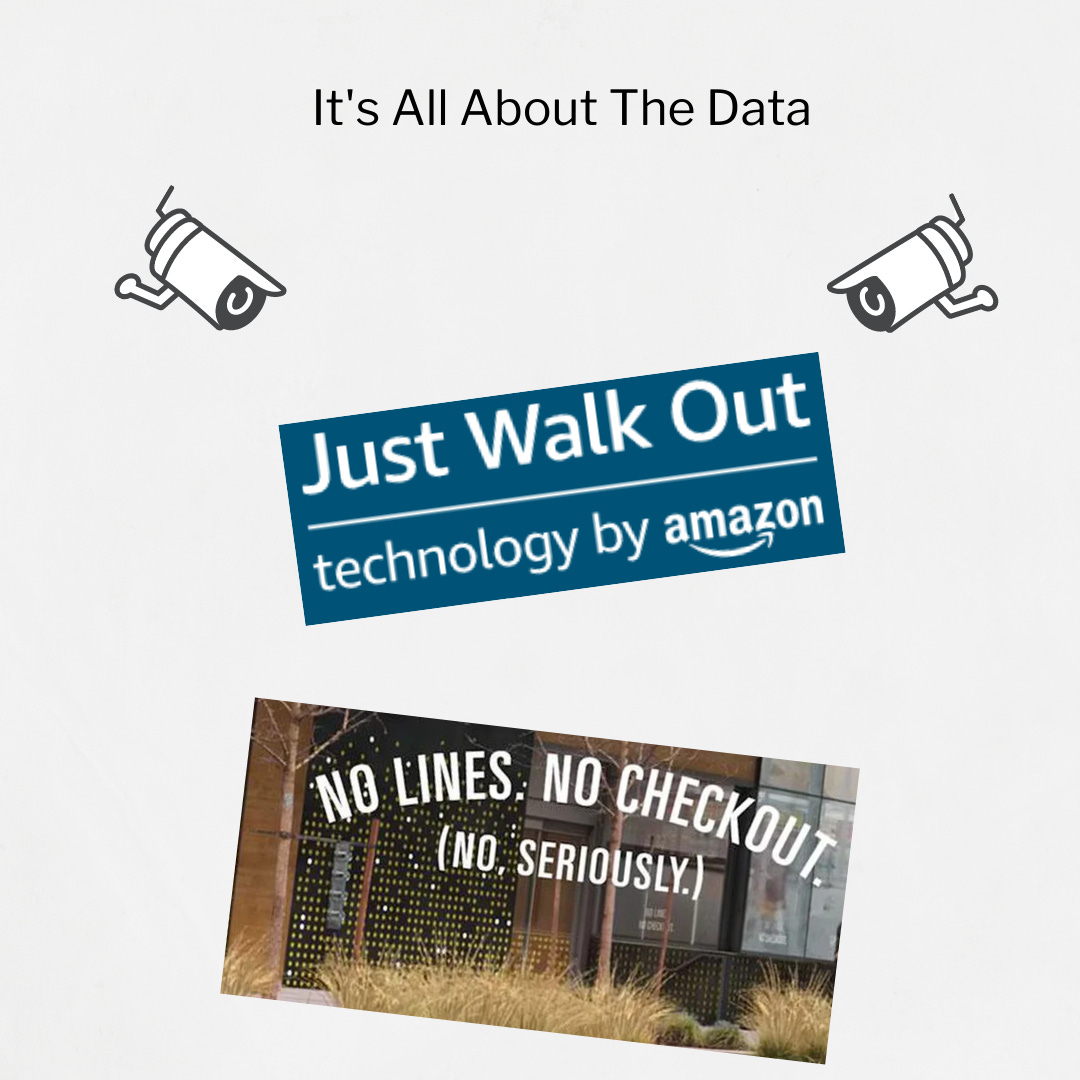
Gathering consumer data has been a challenge for retailers as most of us at one time may have signed up for a store, restaurant, or retail discount card in exchange for discounts. After a recent interaction with a new attempt at consumer data tracking, it prompted several discussions on why consumer data may continue to be a growth industry.
A few weeks ago I visited a well-organized and fully stocked corner grocery store. After quickly locating several items on my list, I decided to spend a few more minutes browsing the remaining aisles of the store. As I turned up the last aisle to walk back to the front of the store I noticed another shopper several steps ahead who did not appear to be slowing down as they reached the exit. With an armful of items they just walked straight out the front door. I braced myself for alarms or store security to suddenly appear, but nothing happened. So after a few seconds of internal debate, I decided to do the same thing and walked out with my snack bars and bottled water.
About an hour later I received an email from the store. Listed were items I selected along with a verification that Amazon had charged my credit card. No laws were broken or items stolen, as the store I visited was an Amazon Go store, a concept launched a few years ago across a limited number of cities. Recently the technology was rebranded as Just Walk Out and is now marketed as an alternative checkout process for non-Amazon retail stores.
Data vs Customers
The technology behind the Amazon stores is impressive but the ability to capture detailed consumer data as people browse a store may be the ultimate value driver. For years retailers have attempted to convince customers to sign up for loyalty programs to capture additional consumer data. Despite a lot of marketing efforts, a Deloitte study of quick serve restaurants found only 15% of consumers signed up for loyalty programs and most abandoned the program within three months. Since loyalty programs clearly do not work, Amazon developed the alternative of trading convenience for the ability to track customer movement and shopping habits within a store.
HEB also recently launched a service to shop their grocery stores with a dietitian. The HEB option has a higher degree of consumer interaction but is another convenience driven strategy to capture customer data and further improve the shopping experience. Grocery or convenience stores tend to be a continuous source of consumer data, but the ability to collect the data in real time has been a much slower process than the online shopping experience. The recent advances with Amazon and HEB may be changing the customer data collection process.
The Next Frontier
We expect physical retail stores to continue exploring options to expand the capture of consumer data and shopping habits. Earlier this year we spoke with an online gaming platform in the process of pivoting from offering online games to utilizing the platform to aggregate gamer data. Online industries are well ahead of physical stores in understanding the customer, but recent improvements in data collection may begin to change how consumers view physical stores. At some point stores may begin modifying inventory based on real-time information based on population data for those moving into or out of an area in anticipation of shopping habits. It’s an area of interest we are following in more detail, as over time we expect physical stores to reflect similar experiences to what customers experience when shopping online.