

Discussing corporate culture is not often part of a start-up business plan but can be influential in determining the success of a new venture. Defining a company culture begins with the first employee, making it important to spend time crafting the process.
Regardless of the number of employees, every company has a culture. Even a company of one person has a certain work ethic, strategy, ideas, and history which shape how and why actions are taken or products are created. The word “culture” comes from writings of the Roman orator Cicero where he uses the term cultura animi which translates into development of the philosophical soul.
A more modern definition of culture from the Harvard Business Review article “The Leaders Guide to Corporate Culture” states:
Culture is the tacit social order of an organization: It shapes attitudes and behaviors in wide-ranging and durable ways. Cultural norms define what is encouraged, discouraged, accepted, or rejected within a group. When properly aligned with personal values, drives, and needs, culture can unleash tremendous amounts of energy toward a shared purpose and foster an organization’s capacity to thrive.
The above definition clarifies the power of culture and why companies must remain active in defining and shaping their team’s culture. When considering an investment we identify cultural drivers of a company and how these may influence decisions or actions. During meetings we watch the non-verbal responses of others when their team members are speaking. Zoom has made this process much easier, allowing us to see everyone at once without having to look around a room during a presentation. As a founder or executive is talking, we have seen others rolling their eyes or pursing their lips during the presentation. In our limited study these signs indicate a greater chance of uncovering deeper issues or challenges, so it prompts us to ask more questions and conduct further due diligence. When a company culture is poor or poorly defined, employees struggle to challenge ideas or norms and instead provide subconscious clues indicating what they may not be comfortable verbalizing.
Good Culture
Building and sustaining a corporate culture begins with understanding the history of a company. Just as states or countries teach children about history and culture in school, a company should do the same for its new employees. Sharing the story of how a company was founded, significant challenges or great successes allows team members to feel part of the organization and understand the basis of values or corporate customs.
Teaching the culture and history of a company may be as informal as telling stories over lunch about how a company was started or creating a presentation detailing the history of an organization. History is the foundation of a culture, so understanding it allows employees to feel part of the team.
Start-up Cultural Challenges
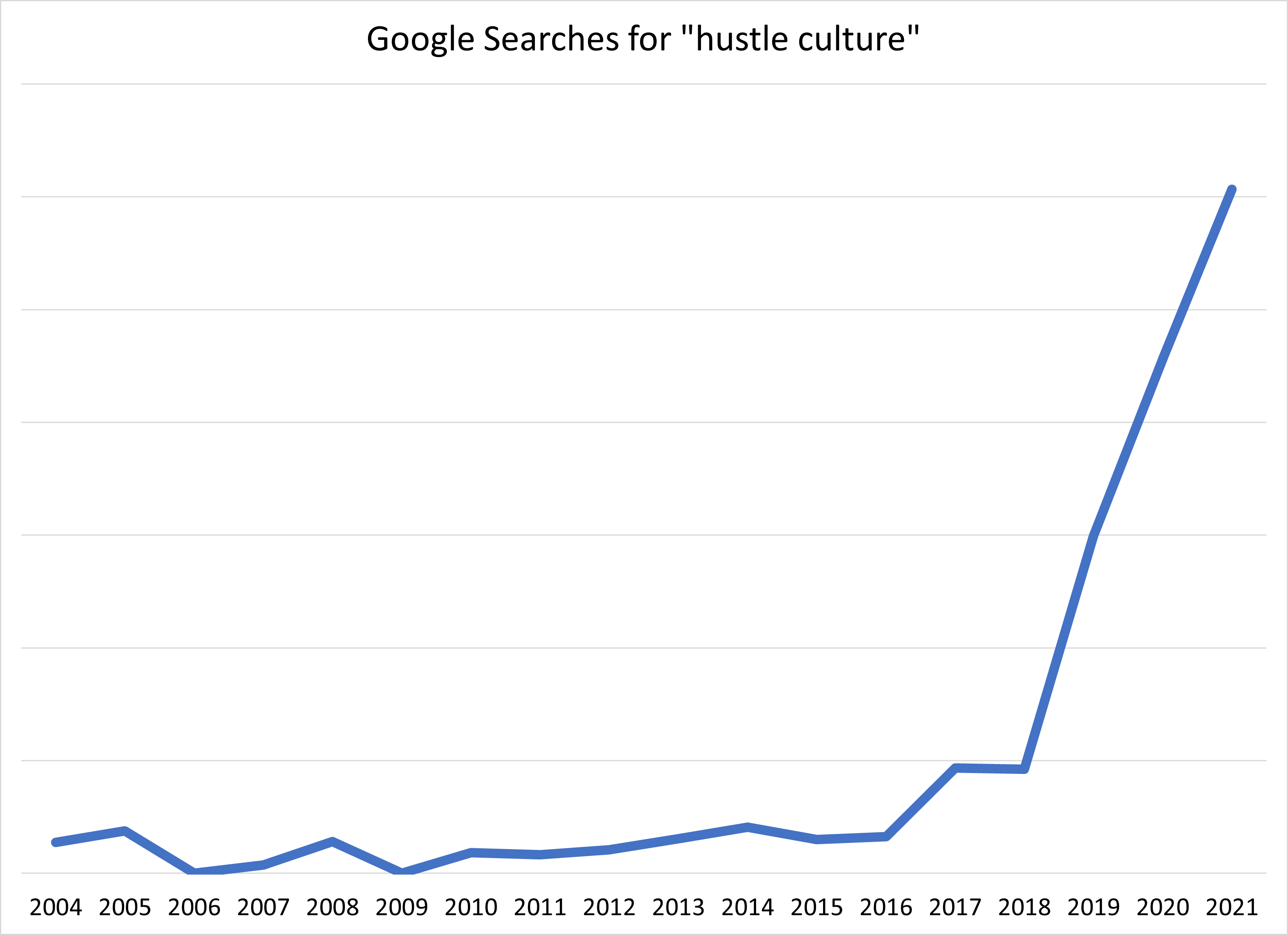
Smaller or start-up companies risk inadvertently adopting aspects of the “Hustle Culture” which focuses on achieving material gains and adopting a 24/7 work culture. Hustle culture is a relatively recent phenomena but one which has quickly gained traction as the below chart of Google search results shows the phrase “hustle culture” only started increasing the past few years.
When launching a company, working longer than normal hours is not uncommon. Building a culture around equating hours worked to success creates a toxic environment where employees may start bending rules to get ahead or make mistakes out of exhaustion. A few years ago we met the head of sales for a software startup and asked what advice he gives new sales team members. During the first week on the job he encourages new hires to spend at least $5,000 on a new wardrobe to create a professional image and also to incentivize them to work hard in order to pay off the new cloths. Not surprisingly this company failed due to inflated sales data.
Crafting The Culture
The first few steps on the path of building a company culture can be difficult to reverse as culture tends to build on itself as new members join the team. We encourage companies to create an outline defining the team’s culture at the beginning of a new venture and be mindful about revisiting it often. Part of defining culture also includes a company’s history and key milestones as both are building blocks which add depth to a company story. Putting the components of culture into writing also empowers the team to recognize when corporate actions may start to deviate from the established cultural norms.
Start-ups may not view culture as an important component when focused on building a new product or service but taking the time to define key cultural components in the early days develops a strong foundation for future growth.
Reading Recommendation
Months ago we received a copy of Lindsey Vonn’s book Rise which was released earlier this year. We set it aside for a few months as expected it would be shallow and focused on a hustle culture narrative talking about winning races and growing endorsements.
The book is the complete opposite. It provides a rare and raw look inside the struggles of becoming one of the greatest skiers and overcoming significant emotional and physical challenges. Definitely worth adding to a summer reading list.