
Companies of every size, including solo entrepreneurs, face decisions. In working across different companies, we have seen great forecast models, risk scenario development, SWAT analysis, or any number of decision tools. All are useful but must be paired with the correct process of making the decision, which can also be a great tool to increase investor confidence in a management team.
Once everyone joined the call, the CEO & Founder quickly begin talking about why using most of the company’s remaining cash for an acquisition was a solid idea. After a few minutes of laying out ideas and discussing the latest forecast, the call was opened to others on the team for their input. Everyone on the team either agreed or remained silent. Without missing a beat, the CEO took the response to indicate a uniform team decision so moved on to outline next steps in the acquisition process.
What just happened?
When the senior person in the room or on a call speaks first, it changes the political dynamics. Suddenly those who object to a decision begin mentally calculating the political impact to their career and quickly realize not speaking up and going along is probably the easier path. It is not uncommon for decisions in companies big and small to be made in this manor, as we have seen powerful founders or leaders (Theranos, WeWork, and others) overpower the decision-making process and drive companies into failure.
The opening example is real and one which ultimately ended in a poor acquisition that led to bankruptcy. It is not a unique example as similar behavior occurs in all types and sizes of companies, and usually is never recognized by management. We typically encounter decision challenges while leading companies through the budgeting or forecasting process, as deciding where to spend money tends to elicit a higher degree of emotion and occurs in every company.
Alternative Approaches to Decision-Making
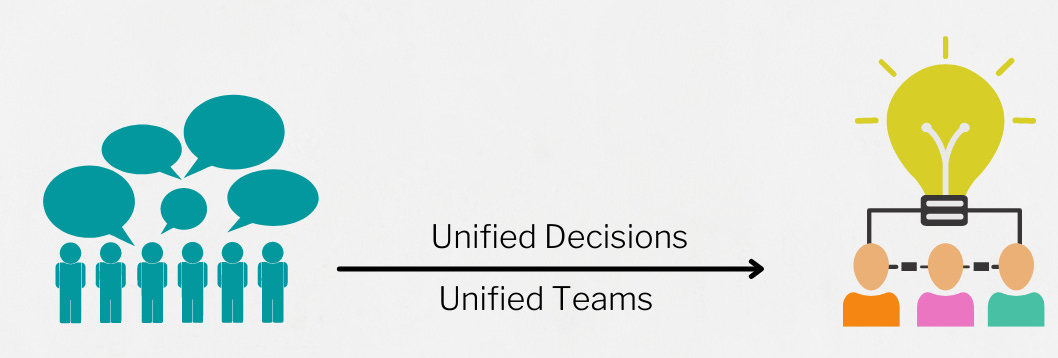
Founders and CEOs tend to have strong personalities, so convincing them not to speak first in a team meeting is difficult but not impossible. Allowing everyone a voice is surprisingly easy to accomplish if approached with the correct process. Use post-it notes to vote before a decision, or for virtual team’s services such as Momentive (formerly known as SurveyMonkey) or Zoom Polling provide anonymous ways to collect decisions. The goal is developing a quick and easy method which can be used in any discussion to allow all team members an anonymous vote.
Team calls beginning with a quick vote on a decision eliminate the risk of political dominance while providing an open forum for everyone to have a voice. Any method will have its challenges, so teams must be careful not to target dissenting ideas but instead embrace the unique perspectives.
Teams Of One
For individuals the same concept can be used and is something we coach solo entrepreneurs to embrace as a means of protecting themselves from making snap decisions. The process occurs over a series of days. Each day write down the decision without looking back at prior days. Then after several days compile all the decisions and review the trends or common themes. The goal is to eliminate any emotional bias or rush to judgement.
Value Added
For companies raising capital, these small techniques may also improve the ability to close investment rounds. Part of angel and venture capital due diligence includes understanding how team decisions are made and looking for areas of potential conflict. Having a system in place to show how company decision-making is done will go a long way with gaining the trust and comfort of investors.