
Happy Thursday, 👋
A lot of our discussions are based on experience mentoring and advising early-stage companies. We have also spent several years investing in these same companies, so this week we are taking a different direction and discussing our investment methodology. At the end we also provide an opportunity for accredited investors to learn more about our fund as we continue to invest in companies building the future.
Our Investment Focus
The venture capital landscape is multi-tiered, reflecting the developmental stages of companies. We focus on the Seed to Series A spectrum, a phase where companies begin to secure market traction yet small enough to benefit from strategic guidance through a board or advisory position.
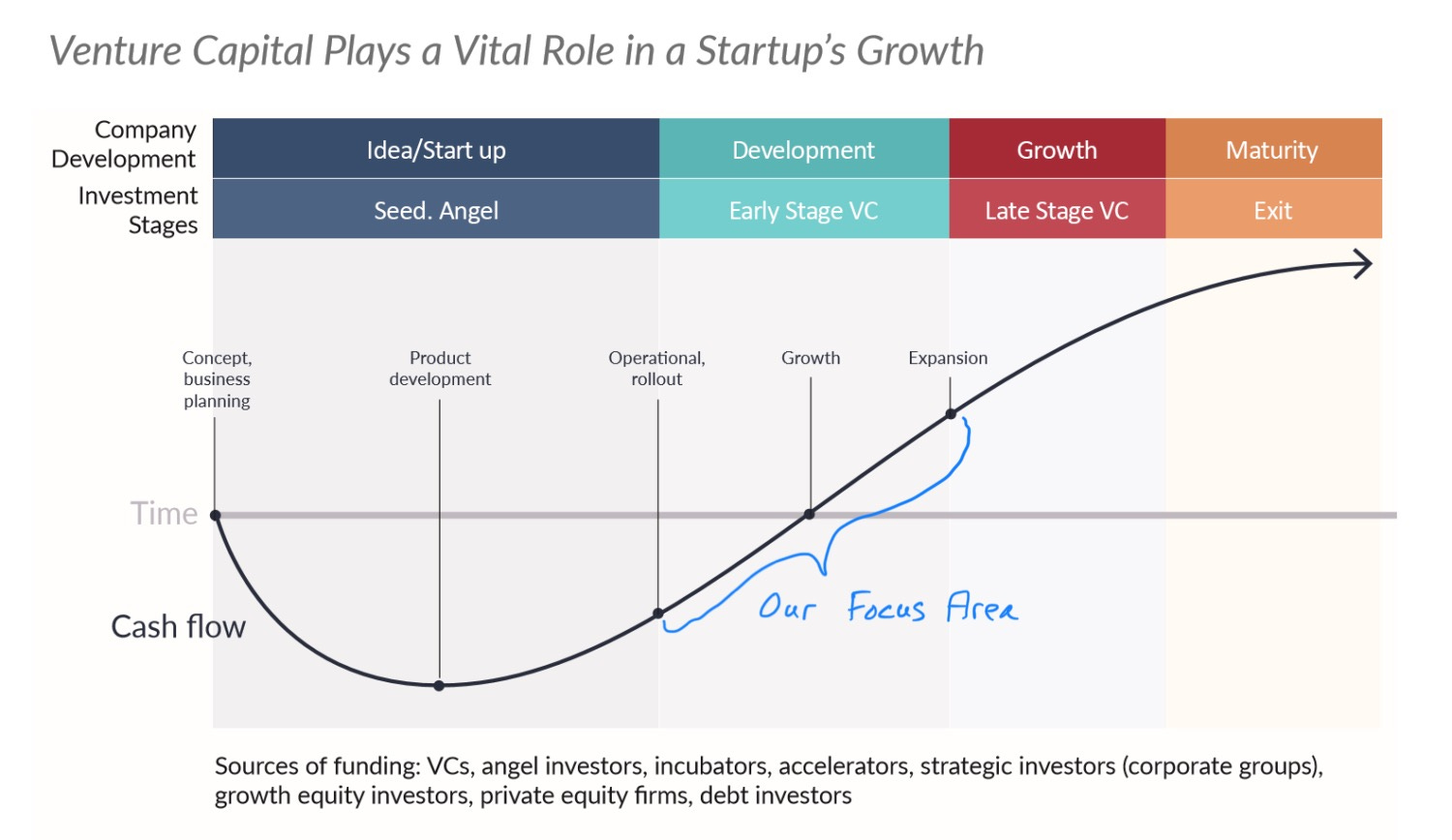
A recent study found a significant increase in return multiples where investors became active board members, demonstrating the importance for early stage companies to have a supportive group of investors. Staying engaged with our portfolio companies also provides us with real-time market feedback and insight across several industries, further improving our investment process.
Private Equity vs. Venture Capital
Often we hear both private equity and venture capital used in the same sentence when someone talks about ways companies might raise capital. Both provide avenues for investment, but there are key differences between the two.
🌳 Private Equity is similar to the meticulous pruning of a mature tree with a focus on improving the tree’s ability to continue growing and remain healthy. Private equity backed companies are often larger, established organizations where investors take control positions and implement operational improvements or explore expansion opportunities. Often the private equity investors control the process and set overall strategy.
🌱 Venture Capital resembles nurturing a small seedling to help it grow over time. Investors take a smaller investment position and often help teams build a foundation, develop procedures, and attract customers. Investors may advise the company but let the founding team retain responsibility for a company’s success.
The Art of Deal Screening
Navigating through the myriad of early-stage opportunities is a formidable challenge. Given the long-term nature and limited liquidity of venture capital investments, a methodical and systematic evaluation process is essential.

We adopted the concept of 'stage gates' from our project management experience to structure our investment decision-making process. Each stage gate represents a critical juncture, with each decision point building upon itself as we continue to refine our due diligence. Our five stage gates encompass:
Macroeconomic Alignment: Assessing whether the opportunity aligns with our overarching economic outlook and investment thesis.
Company Review: Conduct a preliminary analysis of the company's revenue, market size, and growth potential. We initially screen for ventures with some level of revenue generation to validate the business concept.
Team and Terms: Engage in an initial conversation with the company's team, assess the advisory board, and evaluate general deal terms. The goal is to understand how the team presents the company and gain a high-level understanding of the strategy.
Detailed Diligence: An in-depth review of financials, including metrics such as burn rate, KPIs, customer acquisition costs, and margins. We also discuss the company with our industry advisors to solicit their feedback.
Invest: Finalize terms, funding the investment, and establish a reporting cadence with the company.
Our Investment Thesis: Data and Moategy
Our investment thesis is centered around data. Every industry uses some form of data, how we interact with the data has defined several historical inflection points. Over 40,000 years ago the first form of data was paintings on cave walls and since then each new iteration has led to an increasing rate of economic innovation.
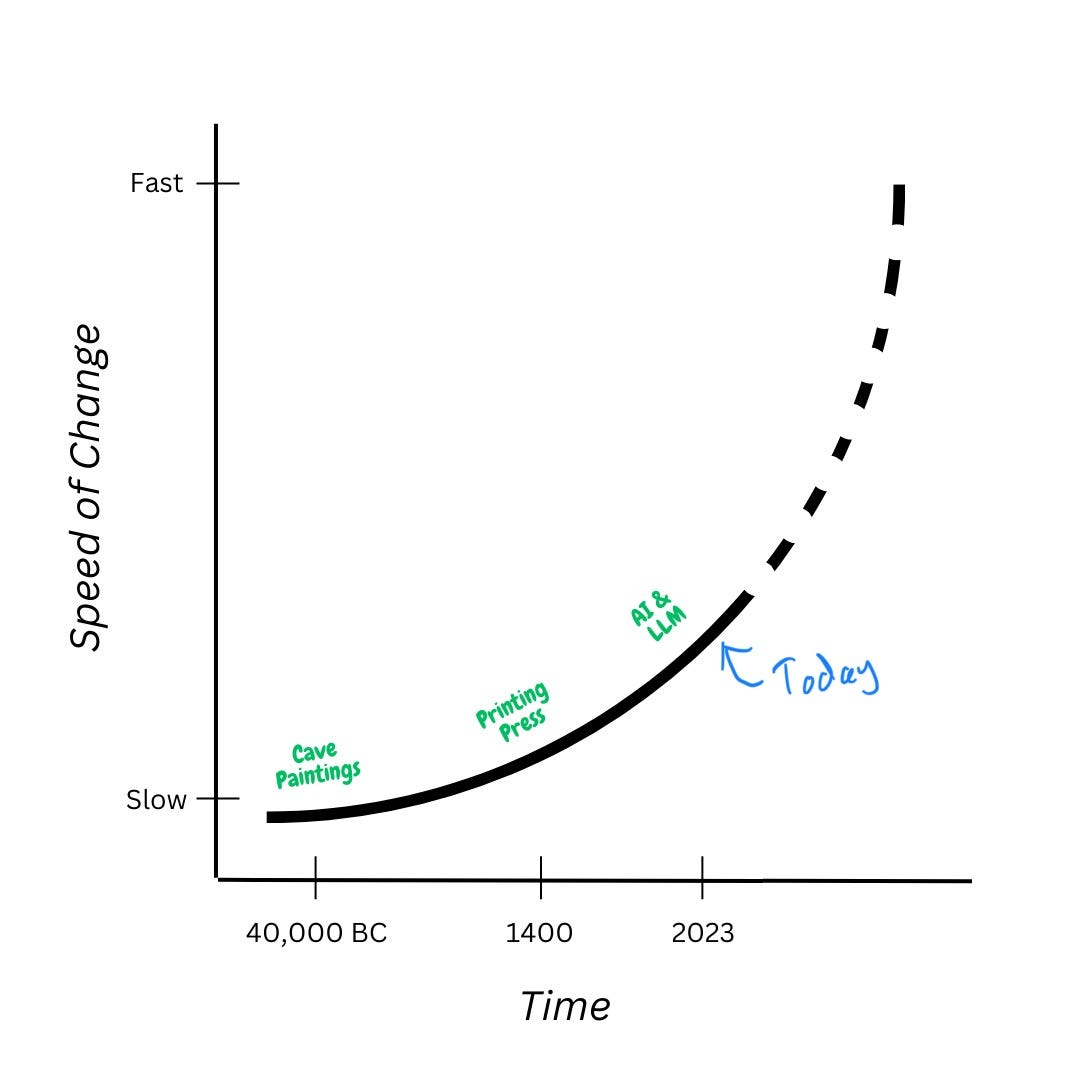
We also seek out teams creating a synergy between a defensible business model or moat, and an aggressive growth strategy, a concept we termed Moategy. As data usage and technology continue to expand, we believe companies able to combine a defensible advantage with a growth strategy have a stronger chance for success.
Additional Thoughts
Venture investing involves a long-term perspective on economic and business trends. As the Internet and digital data transform into an ever-expanding information repository, we are witnessing a rise in the number of companies leveraging this vast resource. Innovations in Artificial Intelligence, Large Language Models, and sophisticated data analytics are laying the foundations for building companies of the future across every industry. Our goal is to identify and support teams combining a solid foundation with the vision to develop new ideas for creating the next economic inflection point.
If you are interested in having a further conversation or participating in our latest fund, we welcome you to reach out. Opportunities for new investors remain as we persist in our search to find and invest in the architects of the future.
Click here to fill out a few details and we will send you a few more details on our early-stage investment fund.
Wishing everyone a great weekend,
-The Caymont Ventures Team.