
Happy Thursday, 👋
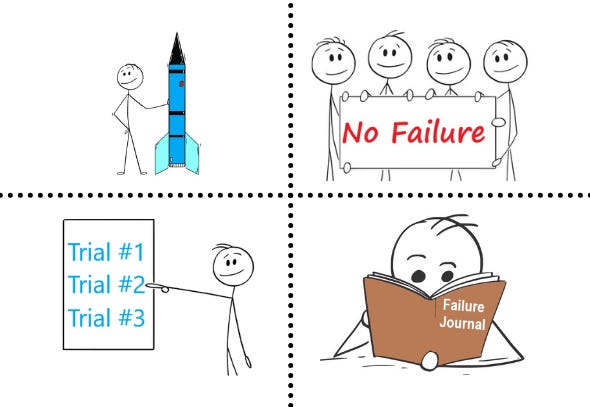
The phrase "failure is not an option" is often echoed in the corporate world. Originating from the script of the Apollo 13 movie, this motto reflects NASA's exhaustive approach to problem-solving before conceding defeat. While the motto was not exactly NASA's original approach, the Hollywood rewording has found a place in many corporate presentations.
The Reality of Corporate Failure
Does the phrase imply that teams should avoid any activity where failure is a possible outcome? Is the culture built around avoiding failure at all costs? In many traditional corporate environments, salary increases and bonuses are tied to successes, with failures negatively impacting performance evaluations and compensation. This structure often rewards stability and discourages the exploration of new ideas, products, or concepts. Public companies, judged by quarterly earnings reports, also push management to take calculated steps to mitigate failures, fostering a culture where avoiding failure is paramount.
Embracing Failure
In the startup ecosystem, failure is often seen through a different lens. For emerging companies, failure can be a welcomed outcome. The process of developing new products or ideas involves numerous failures, each serving as a learning experience and an incremental step toward a successful product.
Although new companies may expect to encounter challenges and failures, there needs to be a consistent balancing act. The amount of funding raised leads to a finite number of attempts, making it important to maximize the learning from each failure. Maintaining an open dialogue with investors and providing visibility into the failure process can often make the difference between raising future capital or losing investor confidence.
Startup vs. Founder Failure
Some founders may have a prior failed attempt at launching a company but are still able to raise capital for new ideas. As investors, we categorize past failures into two types when deciding on future investments:
🏭 Startup Failure: Companies might fail when their concepts or ideas are ahead of current technological capabilities. Regulatory changes or market shifts can also adversely impact new companies. Systemic risks are difficult to mitigate for a new company, and despite strong team efforts, it may be difficult to avoid failure.
🤷♂️ Founder Failure: This is often more personal in nature. Some founders may give up when encountering challenges, lack management or leadership skills, or be unable to translate their ideas into reality.
If your startup fails, take the time to evaluate the factors that led to its downfall. Develop a narrative on what happened and be prepared to discuss lessons learned. Founders who fail to recognize their own shortcomings often struggle to secure funding for future ventures.
Additional Thoughts
Building at an industry inflection point inevitably involves encountering failures, which are vital for accumulating the knowledge necessary to achieve future successes. We seek companies that appreciate the benefits of failure and can assemble these puzzle pieces as they continue improving. Without taking risks, society remains stagnant. It’s the knowledge gained from failures that allows companies to shape the trajectory of future developments.
While the corporate mantra "failure is not an option" may drive some to avoid risks, the startup world thrives on embracing failure as a critical component of innovation and growth. By learning from failures, startups can achieve breakthroughs that push industries forward and ultimately contribute to broader societal progress.
Wishing everyone a great weekend,
-The Caymont Ventures Team.