
Happy Thursday, 👋
Several weeks ago, a founder approached us with news they had decided to sell the company. It caught us off guard. Customer traction was improving. a new product version was about to launch, and cash flow projections were stabilizing. On paper, the company appeared positioned for continued growth.
What changed was not the business fundamentals. It was the timeline attached to an acquisition offer.
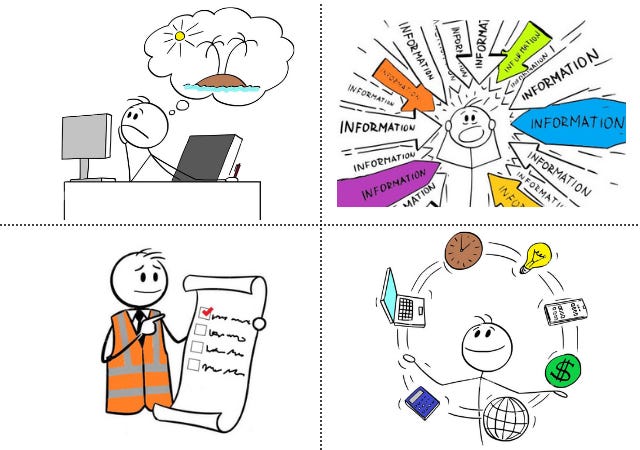
The founder was internally exhausted. Years of carrying the company forward had taken a toll. When the offer appeared with a defined window to act, the idea of an off-ramp suddenly carried more weight. There had been no structured discussion around leadership transitions, acquisition criteria, or crisis planning. For the past few years, the primary focus of the team had been product releases and maintaining a positive bank balance.
Startups operate with small teams stretched across multiple functions. It is not surprising that most do not build formal playbooks for unexpected events. Planning is often misinterpreted as weeks spent developing multi-volume binders covering every conceivable scenario. That is not what we are suggesting.
Instead, imagine stepping back once or twice per year and asking a simple question: what are the three to five events that could materially reshape this company over the next twelve months?
Maybe it’s an unexpected acquisition offer, a product failure, or changes to key customers.
The goal is not a precise roadmap. It is a one-page checklist the team can reach for when caution lights begin flashing.
Discussing how to respond to unexpected material events may feel straightforward in a calm moment. but layer on the surprise nature of those events and the fatigue of running a startup, and stress begins to compound. That compounding pressure alters decision-making. This is exactly why fire drills occur when buildings are quiet rather than when smoke fills the hallways.
What Exhaustion Does to Decision-Making
In the startup world, stress is normalized. Long hours and compressed timelines are almost cultural expectations. Yet research shows that fatigue does more than make us tired. It changes how we evaluate risk.
As cognitive resources decline, people default to simpler and safer options. A well-known study by Danziger found that court judges were significantly more likely to grant parole early in the day, with approval rates declining as the day progressed.
A similar pattern appears in medicine where a study found physicians were significantly more likely to prescribe unnecessary antibiotics later in their shifts. Prescribing the antibiotic was faster. It avoided conflict with patients. It resolved the appointment efficiently. The harder path required additional testing, explanation, and potential patient disagreement. Greater fatigue slowly nudges even highly trained professionals toward friction reduction.
Behavioral economics reinforces this dynamic. Prospect Theory demonstrates that under stress, humans become more loss averse. The emotional weight of potential loss grows larger than the appeal of potential gain. When exhausted, we are more inclined to accept what feels “good enough” rather than endure additional uncertainty for greater potential upside.
For founders, these dynamics are consequential. When fatigue combines with an unexpected challenge, continuing to push forward becomes psychologically more expensive. Certainty begins to look attractive. The immediate resolution feels safer than extended ambiguity.
Fatigue narrows time horizons and shifts attention toward relief rather than long-term value creation. This is precisely when having a predefined decision framework becomes valuable.
Designing Decisions Before You Are Exhausted
Consulting firms often conduct lookback analyses to improve decision processes. For startups, however, key decisions can be binary. Unlike large corporations, startups do not always have the luxury of learning from multiple iterations. Sometimes the only lookback analysis occurs when the company shuts down.
Instead of waiting for retrospection, founders can practice structured anticipation. The concept of a pre-mortem is particularly useful. Once or twice per year, leadership teams outline three to five high-impact scenarios and discuss how they would respond. These sessions are not about building exhaustive contingency plans. They are about establishing guiding principles and first-response frameworks.
Consider a key customer departure. Rather than reacting in panic, the team has already discussed potential actions: adjusting cash burn, reallocating resources, refining messaging to other customers, and communicating clearly with investors.
Or consider the opposite scenario. A customer decides to deploy globally, requiring rapid scaling. The team has thought through hiring deployment expansion, operational bottlenecks, and how to protect service levels for existing clients.
The objective is not perfection. Often a few bullet points or a checklist is enough. It is the equivalent of a one-page safety briefing. In a moment of exhaustion and time pressure, that framework can reset thinking and counteract reactive decision-making. Preparation does not eliminate stress. It lowers its distortion.
Final Thoughts
Founders are trained to monitor cash burn, customer churn, and competitive threats. They are rarely trained to monitor cognitive burn. Yet fatigue is an operational risk. It narrows time horizons. It intensifies loss aversion. It makes certainty feel disproportionately valuable at moments when optionality may offer greater long-term upside.
The solution is not to eliminate fatigue. Startups are demanding by design. The solution is to build decision infrastructure during stable periods. To step back once or twice a year and ask, “What could materially challenge us?” and “How would we respond?”
Not everything can be predicted. Not everything can be planned. But even a basic framework lowers the emotional temperature when pressure rises.
Emergency checklists exist for a reason. Hopefully they are never needed. But when stress arrives, having a baseline framework helps ensure decisions are driven by strategy rather than exhaustion.
One of the most strategic decisions a founder can make is ensuring that major choices are made from clarity, not fatigue.
Wishing everyone a great weekend,
-Eric.