
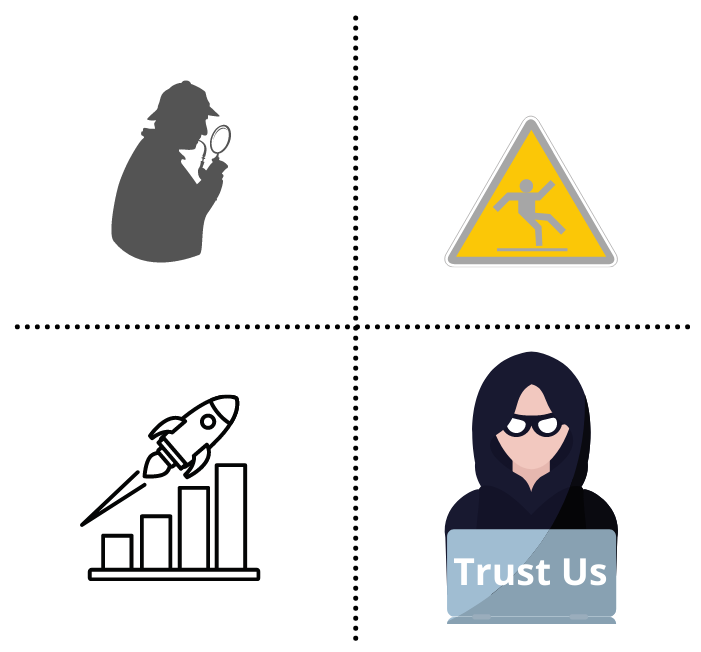
Despite a record year of fundings and deal flow, the start-up space revisited a few large failures in 2021. Each involved well-known investors and venture capital funds, proving even the most sophisticated can make mistakes. Developing a short checklist helps investors big and small structure their initial research into a start-up and minimizes optimism bias.
Venture capital funding during 2021 totaled a record $330 billion across 17,000 deals. The strong public markets helped lift private company valuations, resulting in almost 600 new unicorns (companies with a $1 billion+ valuation). During the year, the SEC also increased the maximum crowd funding level to $5 million, expanding the opportunity for more individual investors to back start-ups.
Activity in 2021 implies continued growth of the venture capital market, but as valuations and deal flow increase so does the potential for fraud. The past year served as a reminder that investors large and small are not immune from mistakes. In August 2021 the founder of HeadSpin was arrested and charged with its $1 billion implosion. The HeadSpin indictment covers several areas of mismanagement which further due diligence may have uncovered, but instead statements indicate investors placed a high degree of trust into the company’s founder. Founder faith was also on display during the Theranos trial which serves as another warning how founder fraud can materialize. Both cases followed a similar path: a start-up gains media attention, which attracts interest from larger investors, increasing the pressure to perform, founders start cutting corners to maintain market hype, company implodes.
We expect 2022 to be another year of record start-up deal flow and increased pressure on founders to drive valuations. As the start-up market continues expanding, it remains important to conduct detailed due diligence and not allow market sentiment to influence investment decisions. Unlike the stock market, venture capital, angel investments, or crowd funding transactions are long term and illiquid, so independent due diligence is crucial to being a successful investor.
Initial Due Diligence
Our investment diligence process can take weeks or months depending on deal complexity, making it impossible to conduct detailed research on every opportunity. Instead we developed three initial screening questions which can be used across industries:
What problem is the company solving?
Why is this company best positioned to solve the problem?
What can go wrong?
Most companies are great at answering the first two questions and get stuck on the third. Start-up investment presentations tend to focus on capturing investor attention and building excitement but less often discuss downside risks. Founders tend to have a high degree of inherent optimism bias, so as investors our goal is to set that optimism to the side and understand the true nature of the company. Asking “what can go wrong” is a quick method for refocusing on the basic drivers of company valuations and remove upside bias.
Start-up funding is expected to remain strong, providing an opportunity for more founders to access capital and grow their ideas. The continued growth of the start-up marketplace allows more investors access to greater deal flow so developing a detailed due diligence process should be the foundation for investors considering a $100 crowd funding deal or a $100,000 Series A investment.