
Happy Thursday, 👋
Sharing lessons learned during a career or offering advice is a great opportunity to shape the trajectory of a company. Across various organizations and incubators we volunteer as mentors and throughout the process have recognized several recurring themes. Below we describe a few of these to help further guide mentorship conversations.
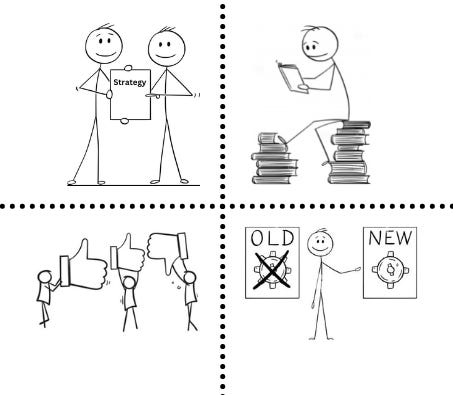
🎯 Outline The Strategy
The simple task of outlining a company’s strategy and goals is often one of the most powerful actions for building a successful business and mentor relationship. Developing a strategic outline covering the business strategy and high level goals keeps a team focused when encountering challenges or making decisions. It also allows mentors to quickly understand what a company is trying to accomplish and where they may add value in the discussions.
As a company takes on more projects, we suggest teams and mentors define how their specific tasks fit within the overall corporate strategy. If a discussion takes more than a few minutes to tie a project back to the larger corporate strategy, it may be a sign to reconsider the idea.
📚 Carefully Build on Others’ Knowledge and Experience
In 2017, Cambridge University released the full text of Stephen Hawking’s PhD thesis, during which Hawkings remarked “Each generation stands on the shoulders of those who have gone before them”.
Leveraging the knowledge and experience of others is a key shortcut for overcoming challenges. We use the word “carefully” as part of this theme since mentorship requires balance. Hawking’s statement suggests leveraging historical knowledge built over generations but does not imply we should ask past generations to carry us forward.
Teams should be careful to separate the mentor relationship from the investor relationship as too often we see companies misinterpret the interest of a mentor as a reason to push for an investment, which makes for some awkward discussions. Keep the mentor relationship focused on leveraging knowledge and let the mentor decide if they want to direct the conversation toward an investment discussion.
🎨 It’s Ok to have a Hobby
There is a sense of urgency when launching a new company or pursuing an idea. Start-up teams talk about driving forward and pushing through challenges, but often some of the best ideas occur when the team is able to individually focus on something unrelated to the business.
We wrote about the importance of Hobbies in a previous discussion and why it can be a path toward success. Before taking up your paintbrush, write down current challenges or problems as this will seed the subconscious mind. When your conscious mind is focused on painting a masterpiece, your subconscious uses the uninterrupted time to keep working. Don’t be surprised if suddenly a great idea or solution appears when you are deep into painting happy trees.
👍👎 Get Comfortable with Feedback
It’s difficult to receive feedback, especially when it goes against your ideas or way of thinking. A good mentorship or advisory relationship is built on being open to discussing differing opinions and approaching it from a constructive perspective.
The method of communicating feedback often clouds the message as most mentor relationships tend to be newer connections between people who are not accustomed to working together. Before engaging with an advisor or mentor, have a discussion regarding how best to approach the feedback and communication process.
🎉 Look Back and Celebrate Progress
The end goal may be a successful exit or monetization, but that could take years to achieve. Celebrating the small wins and incremental success is something we suggest all companies consider and often helps teams generate additional motivation to overcome new challenges. As a third party not actively engaged in the business, mentors are well positioned to spot these incremental points of progress.
Mentors can also help a team use its progress to develop case studies demonstrating an internal strength in overcoming challenges. These case studies can be used to strengthen the biographical slide of an investor presentation and demonstrate the cohesiveness of the team.
Additional Thoughts
The above themes should guide aspiring mentors or companies looking for additional guidance from industry experts. Sometimes a mentor just asking the “why” or “what if” questions can allow a team to reframe its perspective and overcome a challenge.
The range of mentor involvement may vary from a single conversation to having multiple lunch meetings throughout the year. Regardless of the structure, keeping the mentorship relationship focused on knowledge transfer and being mindful of the process makes a mentorship program a powerful tool for companies of any size to consider.
Wishing everyone a great weekend,
-The Caymont Ventures Team.