
Happy Thursday, 👋
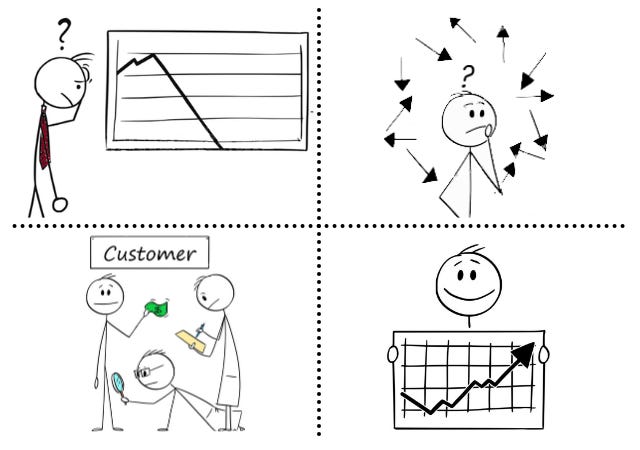
We live in a world where nearly everything we do produces data and feedback. From the number of steps we take each day to our real-time location and even how well we sleep, we are constantly tracked and informed. Yet when it comes to startups, many founders resist getting the same kind of continuous feedback on their idea or product. The irony is that real-time feedback can be the most valuable tool they have in the early stages of building.
Customer Feedback Early and Often
When building a company, it is critical to involve customers early and often. Feedback during the development process can save enormous amounts of time and money. A common mistake is confusing a solution in search of a problem with a problem that genuinely needs a solution.
In conversations, it is easy to ask prospective customers if something sounds interesting. Most people will politely say yes. Founders then take that validation as proof of demand. The real test comes when you ask those same people to subscribe today at an early discounted rate. Suddenly, the answers become more honest. That simple shift in how you frame the question separates polite support from real market feedback.
Nice-to-Have vs. Must-Have
The difference between a nice-to-have and a must-have product is enormous. Too many teams get stuck in their own echo chamber, convinced they are building something the world needs, when they are building something only they wish existed. Instead of relying on internal conviction, go out into the market. Identify the moments where an industry is shifting, what we call inflection points, and align your product to that change.
We recently met a company with a truly unique product. The founder had spent the past few months asking people what they thought of it. Everyone seemed to like the idea and only offered minor suggestions for improvements. Despite the positive feedback, no one purchased a subscription, even when the price point was set well below similar products in the market. Interest alone does not create a business; willingness to pay does.
Investors as Another Customer
The lesson from the founder we just described applies to more than just customers. For early-stage companies, investors are another type of customer. They are trading their capital in exchange for belief in the vision. Yet many founders bristle at investor feedback, treating it as irrelevant or dismissing it as not having found the right investor. While it is true that not every investor will align with every startup, repeated rejection often means something in the pitch or the business itself is not connecting.
The fundraising process is its own feedback loop. If investors are consistently passing, the founder should ask why and listen carefully. Most investors make up their minds within the first 30–60 seconds of a pitch. If the idea does not grab them, it’s worth unpacking why. Just like customers, investors will not always be blunt with their feedback, so it is on the founder to probe. Treat investors like customers: ask them what excites them, what concerns them, and what they need to see before they would write a check. With thousands of companies crossing their desks each year, investors have a unique vantage point on what stands out.
Balancing Passion and Adaptation
None of this is meant to dampen a founder’s passion. Belief in your company is essential. But passion without adaptation is stubbornness. If sales are flat and investors keep passing, the market is speaking. The most successful founders are those who combine conviction with humility, adapting their product and their pitch based on the signals they receive. Many of the companies we have backed succeeded not because they got it right the first time, but because they listened, adjusted, and kept aligning their offering with market demand.
Final Thoughts
In the end, money itself is one of the most powerful forms of feedback. When you ask someone to pay, you learn quickly if your product is essential or optional. Enthusiastic buyers will hand over money right away. Hesitant ones will explain exactly what is missing. Either way, you walk away with valuable information.
For founders navigating the uncertain early stages: ask for feedback from both customers and investors, and really listen to what they say. Encouragement feels good, but real commitments, whether a customer subscribing or an investor writing a check, are the proof points that matter. Think of them as the startup equivalent of the real-time data we track in everyday life: signals that guide progress and confirm you are moving in the right direction.
Wishing everyone a great weekend,
-Eric.