

Happy Thursday, 👋
Technological advances continue to increase the opportunities for developing new businesses. Just a few years ago, hiring people from anywhere in the world was challenging. Today, it's common to have a team working on an idea from virtually any location. Some even argue that technological advancements are reaching a point where we may soon see a billion-dollar company with only one employee.
However, the rapid pace of development across industries presents a significant challenge for early founders deciding what type of company to launch. The abundance of tools and resources can hinder decision-making, often obscuring the real challenges that only those with industry knowledge understand.
Circle of Competency
To cut through the noise created by the growing availability of resources, it's crucial to focus on what we know best based on our individual backgrounds. A well-known concept is to focus on our "circle of competency," or areas where we have greater knowledge or experience to guide our actions. In his 1996 letter, Warren Buffet shared his investment philosophy which leverages his areas of expertise to find opportunities where he had a deep understanding of an industry.
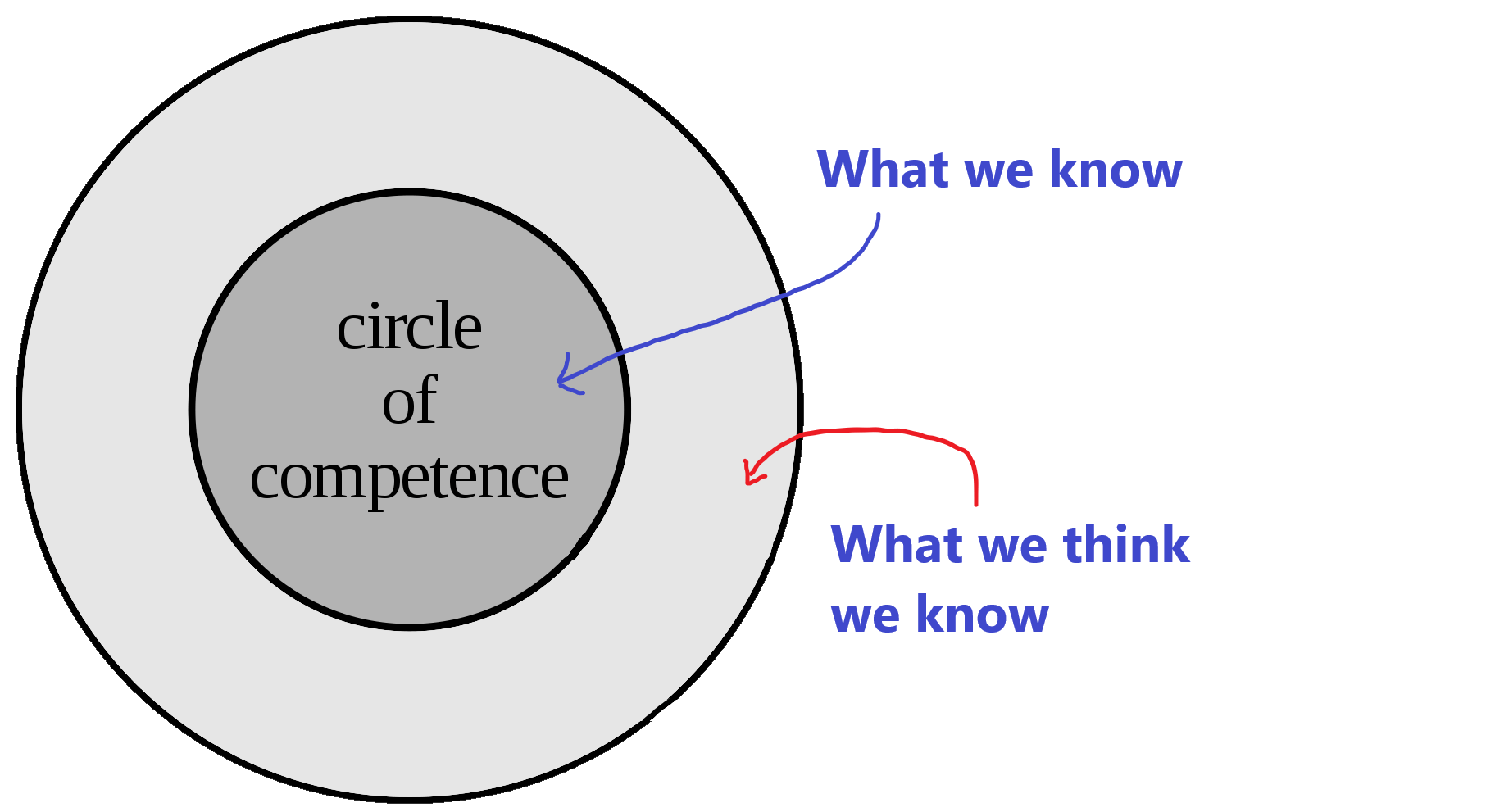
When considering the type of business to start or the area to explore for ideas, begin with what you know. Let your background knowledge or experience serve as the foundation for how you evaluate opportunities.
Fear of Missing Out
Stories of successful businesses are difficult to ignore, especially when contemplating launching your own venture. These narratives often highlight companies that started from nothing and achieved success within a few years. However, the backgrounds of the founders, how their experiences supported their success, or their strong networks within an industry are often discounted in news stories.
The fear of missing out (FOMO) is a powerful force when reading about the success of others. It can lead to the false belief that we can leverage an existing skillset to understand the challenges within a new industry. Recognizing the limits of our competency allows us to outline ways to improve our foundational knowledge. Below are two suggestions to gain a baseline understanding if you are considering exploring ideas outside your current circle of competency.
Suggestions to Develop Competency
Competency can be developed through either passive or active approaches. Those who spend years or decades working in an industry absorb a tremendous amount of knowledge, even without actively seeking specific ideas or theories. For those who need to validate an idea within a much shorter timeframe, two approaches are worth considering.
👨🍳 Short-Term Industry Experience: Find short-term opportunities to work within the industry. The goal is to approach a part-time job with the perspective of learning as much as possible in a short period. For example, if you are a software developer wanting to open a restaurant, instead of just reading about restaurants and watching online videos, take a part-time job in a restaurant. Treat the job as a learning experience to better prepare yourself for launching your own restaurant.
🗺 Mentorship: Seek out strong mentors who are experts within the industry. Mentors can help answer specific questions and guide you in validating an idea or avoiding pitfalls. When approaching someone for mentorship, be specific about your questions and agenda. Most people enjoy sharing their knowledge and helping those interested in their area of expertise, so keep the conversation organized.
Additional Thoughts
Leveraging your personal background and experience is powerful when launching a new business. It provides an understanding of industry pitfalls and an established network to help validate new ideas.
Sometimes, our ideas or solutions may apply to different industries, or we may desire to launch a venture outside our circle of competency. Actively taking a part-time job in a new industry is a great way to learn, along with finding mentors to help answer specific questions or navigate challenges.
Success in the startup world is sometimes attributed to luck. Stories about unicorn founders often describe a team capitalizing on a lucky break while downplaying the core competency of the team and the role it plays in improving the odds of success. Our minds are adept at recognizing patterns and thinking of new ways to solve problems, often drawing on past experiences within an industry. Leveraging a foundation of competency is a powerful way to improve the odds of success.
By focusing on your circle of competency, you can navigate the complexities of starting a new business with greater confidence and clarity, setting a solid foundation and improving your odds for success.
Wishing everyone a great weekend,
-The Caymont Ventures Team.