
Start-up companies tend to be faced with several opportunities. Maintaining a focus on building one great idea or growing in one market can be challenging. Identifying the potential for strategy drift can help investors discover what risks may be present for companies to lose focus.
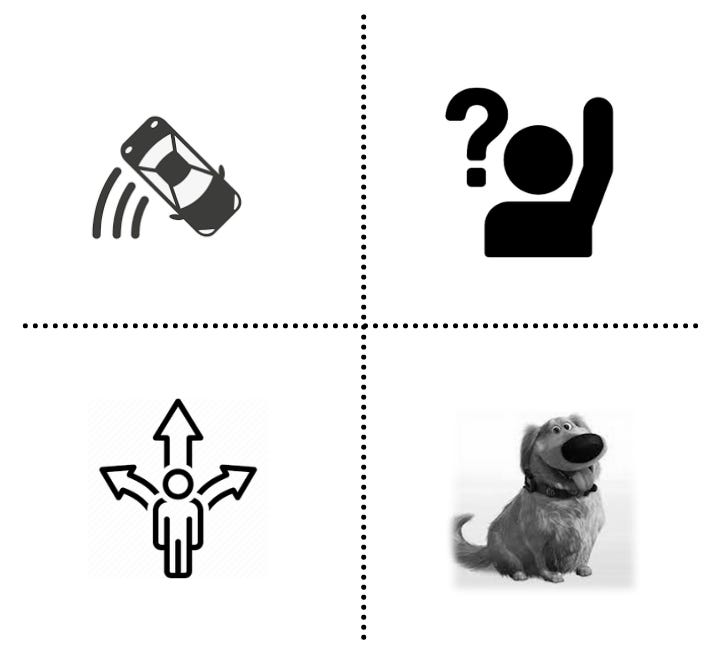
The 2009 Pixar movie “Up” gave us an example of distractions, specifically the concept of “squirrel”. Although we may be focused on something important, our attention can be quickly diverted by a passing squirrel or our attention shifts to another more interesting idea or strategy.
The investing world has a similar term called style drift, which happens when a portfolio manager begins investing in areas outside their normal strategy. An example would be an energy focused fund making investments in the medical field. The investment may be justified based on pursuing the best return for investors but the process is flawed. Investors chose that specific portfolio manager based on maintaining a focus within a defined strategy or industry.
Start-ups are no different as angel and venture capitalists invest into companies based on a specific industry or strategy. When company updates are filled with new ideas or concepts unrelated to the core business, the management team is no longer aligned with the reason investors originally put money into a company.
Identify Strategy Drift
One of the best ways to identify the potential for strategy drift in a company is to simply ask. Ask founders or the management team about different opportunities for the business and listen to the responses.
We recently met a company developing an artificial intelligence app for improving movements (walking, running, sports, etc.). Using a video of a user’s activity, the app offers suggestions on posture, stride or other areas based on machine learning from analyzing hundreds of other videos. It’s a concept applicable to numerous activities ranging from sports to physical therapy.
We asked the founder about other potential applications for the technology. The response was an agreement that there were additional opportunities but the company remained committed to perfecting one specific area before pursuing other avenues. It was clear the founder understood the need to focus and was careful to mitigate strategy drift in the company.
Identifying Drift
Preventing strategy drift is difficult but can be avoided by asking the right questions during the due diligence stage. It often surprises us how just asking a direct question about an alternative use for a product can provide a significant amount of detail for shaping an investment thesis. Sometimes how a company answers questions describes a much different strategy than what is in the pitch book presentation. Listening to the response of management teams in important in uncovering those who may be more easily distracted by a new concept or squirrel running past the window.