
Happy Thursday, 👋
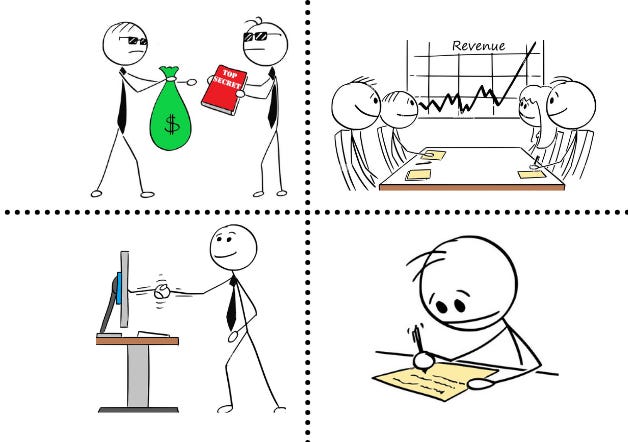
The work of a spy is to build trust, set the scene, and guide a conversation toward a clear objective. Meetings often hinge on first impressions where a slight detail might be the difference between success or imprisonment. Thankfully the startup world is more forgiving as we have yet to hear about a pitch meeting ending with someone jailed in a foreign country.
No good spy would go into a meeting without preparation. A common frustration we hear from founders is they wish they could better control meetings. Preparation is that secret weapon for regaining control.
Why Preparation is a Founder Superpower
Investors and customers are not only evaluating your product, they are assessing your judgment. Logistics, timing, and small signals create a composite picture of how you lead a company, how you face challenges, or what type of product you can deliver. Showing up prepared communicates you can anticipate and plan under uncertainty, respect the time and attention of others, and run disciplined processes when stakes are high. These may feel like small details, but they send powerful signals about how you will perform as a leader when the real challenges arrive.
Great spies do not show up and hope for the best. They pre-brief the team, scout the venue, rehearse the plan, and debrief to capture details and follow-up items. Founders should treat meetings with the same level of care.
The Spy Prep Cycle
One useful way to think about preparation is as a cycle: pre-brief, brief, execute, and debrief.
Pre-brief: Do your homework before the meeting.
Brief: Set the stage and clarify roles right before it begins.
Execute: Stay composed and intentional during the discussion.
Debrief: Capture notes and follow-ups immediately afterward.
The cycle becomes repeatable and gives you a rhythm. Over time, it makes your meetings sharper and your follow-ups more reliable. That discipline alone will set you apart from most founders.
The First Minute: Set the Tone
The opening is your scene-setting moment. Investors and customers decide quickly if they are in capable hands. Aim for calm, confident, and clear. Arriving slightly early sends the first positive signal. From there, lead with one or two sentences that anchors the meeting: purpose, length, and outcome. For a thirty-minute meeting: “Thanks for the time. In the first fifteen minutes we will cover why customers are switching to us, how we monetize, and the milestones that de-risk the round. We will leave fifteen minutes for specific questions and next steps.” Simple, clear, and direct.
When you come out strong, you create the conditions for an engaged conversation rather than a distracted one. The person you are meeting is not wondering what comes next or how long the meeting will last. You tell them up front, removing uncertainty.
Spies leverage these techniques, known in psychology as the primacy effect or our tendency to better remember what comes first. For spies, there is also no reason to linger in one place too long. For founders, dragging out meetings, presenting jumbled messages, or getting lost in tangents signals poor leadership and lack of discipline.
Preparing for Different Types of Meetings
Great spies excel at the preparation phase and anticipate how different scenarios might unfold. You may not need multiple escape routes, but a little foresight goes a long way.
🖥 Virtual Meetings
Virtual meetings are efficient but unforgiving. A small glitch can derail momentum before it even begins. Research using silent video clips shows even without audio, people form an impression from a video in under ten seconds.
It still surprises us how often founders fumble with screen share, appear with poor lighting, or have bad audio. These are little things that can be easily prepped before a meeting and help set a professional tone.
☕ Coffee, Lunch, or Breakfast Meetings
In-person meetings require preparation of a different kind. The venue itself can either help or hurt the conversation. A day before, scout the location or use Google Maps to do a virtual walkthrough. Pay attention to noise levels, seating, and whether there are private corners for a focused discussion. Decide what you want to order in advance so you can devote your attention to the investor or customer, not the menu. Even better, identify one or two go-to venues you can use consistently.
Arrive 15 to 20 minutes early to secure a good table and review your notes. This buffer also gives you time to adapt if the unexpected happens. We once met a founder at a coffee shop that had been robbed the night before, a literal crime scene. The founder arrived early, texted us a picture, and suggested a different nearby venue. A small act that turned a potential disaster into a display of preparation and leadership.
🏢 Office Meetings
Office meetings are equivalent to a spy entering enemy headquarters. You are likely being watched even when you do not realize it, so stay professional. We once worked in an office where the conference room shared a thin wall with the break room. We often overheard conversations before meetings, and a few times our investment decision was already made before the formal presentation even began.
Close with Clarity and On Time
Every meeting should end with clarity and purpose. The peak–end rule indicates people remember two points of an experience: the most intense moment and the ending. Finishing strong also means respecting the clock. Going over time often results in an awkward scramble where one side stops listening and instead is looking for ways to bring the meeting to a close. Worse, it signals poor discipline and disregard for the other person’s schedule.
Great spies never lose track of time. They know control of the meeting includes delivering a strong closing impression. The best way to ensure your closing lands is to deliver it within the scheduled time.
Debrief
Great spies recognize the power of information. After each meeting they debrief, discuss how it went with their team or make personal notes. Write down key points, questions asked, potential timelines, and next steps. Send a follow-up email highlighting key points and next steps. A detailed follow-up reinforces the positive closing impression you left at the end of the meeting.
Final Thoughts: Control the Variables you can Control
You do not need espionage to run a great fundraising or customer acquisition process. You need preparation. Control the setting, know your audience, rehearse the first minute, and close on time with a clear next step.
Spies never walk into a room unprepared. Neither should you. The more you control the controllables, the more space you create for investors and customers to see the real story, your ability to build and execute.
Wishing everyone a great weekend,
-Eric.