

Happy Thursday, 👋
Small companies rarely receive questions about their training strategy, particularly regarding what the company leadership team is doing to further develop their skill sets as the company grows from a few initial founders to several teams working on various projects. Even if investors are not asking these questions, company management should be reflecting on how their personal skill sets will need to adapt as the company expands.
As a company grows, the concept of management evolves. The founder starts to focus more on managing people and processes, rather than products. When making an investment, we look for clues the founder or executive team is cultivating the skills necessary to manage the company as it scales from 3 to 30 people and beyond.
Training Strategies
Smaller companies may not often discuss training strategies since the team’s primary focus tends to be on product development or customer acquisition. We understand the need to maintain a growth mindset, but as a company grows, the management skills of its leadership team also needs to adapt.
Consider the different financial stages a company goes through in its first few years and how the leadership skills change:
🌱 Seed Stage: The founder and their team often do everything from product development to administrative tasks. Everyone pitches in as needed.
🌲 Series A: The employee count starts to grow and the founding team becomes more customer and investor focused. More tasks are delegated and team members begin to have defined roles.
🌲🌲 Series B: The founder and their team are less involved in the details of product development and more focused on broader strategic planning. The team starts to have multiple layers and organizational departments.
Transitioning from building a product to managing multiple departments can happen in just a few short years. Success hinges on providing the team with the training to continue developing managerial abilities as the company advances.
The Game Plan
Developing a strategic approach to training allows the company to track progress and provide an opportunity to show investors how the team is building the skills needed to manage a growing organization. Similar to product development, a training plan should involve outlining the characteristics necessary to elevate the company to the next level. Areas of improvement may include additional management training, refining public speaking skills, or even personal brand management.
Each goal should also have a baseline component so the process is measurable. Consider also using the training plan and progress measurement as an additional discussion point with investors to highlight the dedication of the team to growing their knowledge base in support of expanding the company.
Additional Thoughts
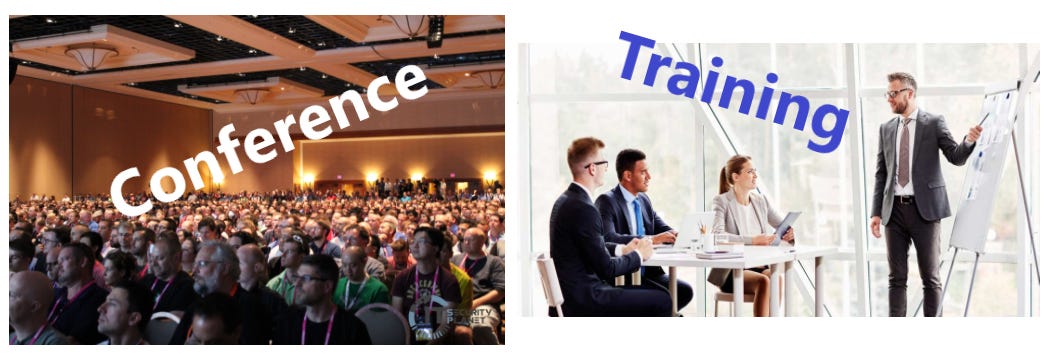
Attending conferences is not typically the same as training. Conferences are primarily a venue for networking and understanding market trends. Training involves a strategic approach to expanding one's understanding and knowledge in a controlled environment where skills can be practiced. Both are important, but they have different approaches and outcomes.
Also as AI and various machine learning modules become more integrated with managing a business, the skillsets of leaders will continue to evolve. Communication will be a key area where we expect training to shift, as public speaking skills become increasingly important while AI takes on more written tasks. Over the next few years, founders may rely on AI to develop pitch books, but they'll still need public speaking and presentation skills training to effectively convey the company's message to investors and future team members.
Developing a strategic approach to training can increase the chances of a company growing from a small startup into a larger organization. The process also reassures investors that the team understands a company evolution involves more than just product development or securing new clients.
Wishing everyone a great weekend,
-The Caymont Ventures Team.