
Howdy 👋,
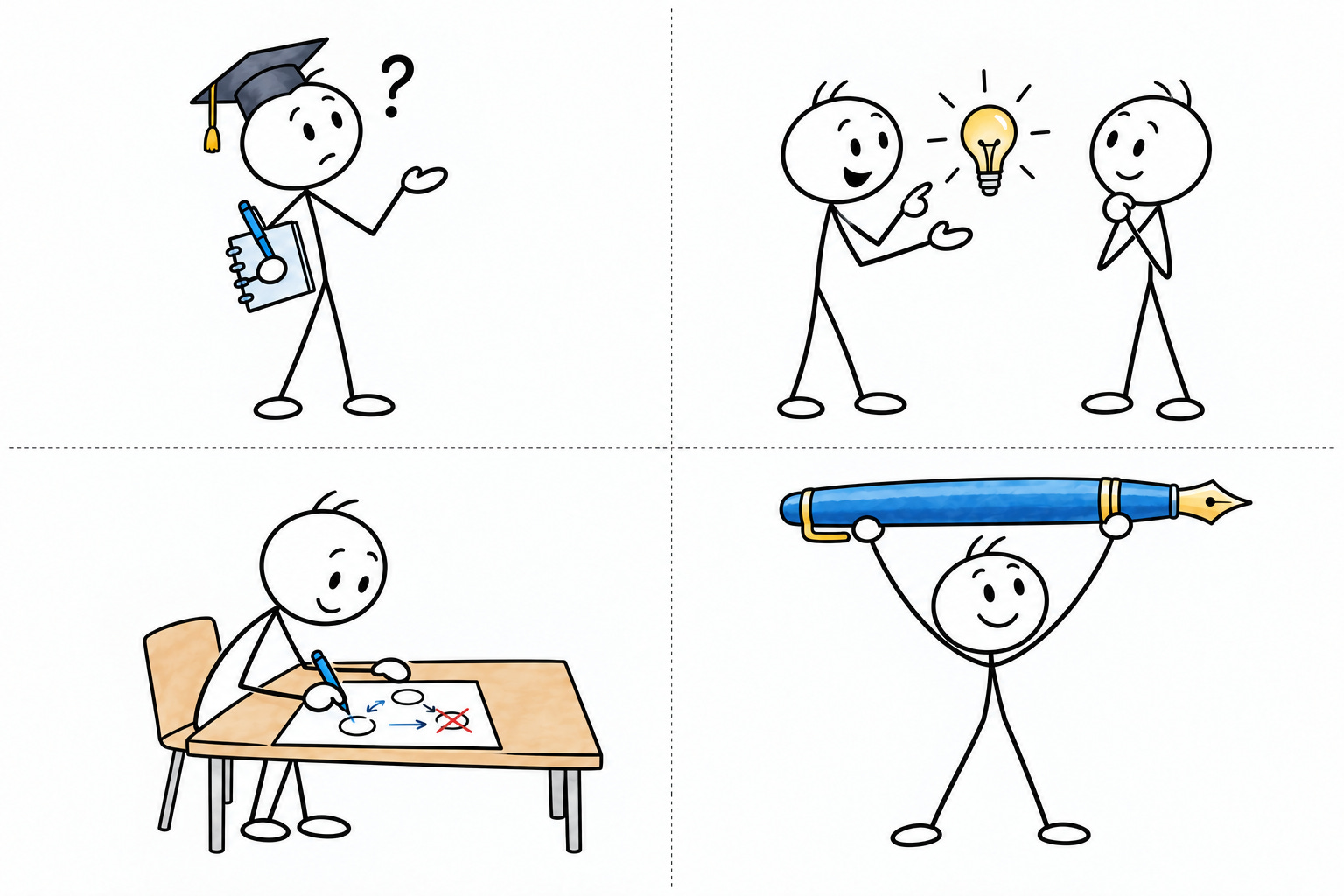
At an AI conference this past week, one of the topics being debated was why college students should still take writing courses when AI can already generate essays, emails, reports, and even investment memos. Technology increasingly handles tasks that once required considerable time and effort, so it seems reasonable to ask whether writing should be another task we automate.
The discussion made me question what we actually gain from writing. It takes time, effort, and concentration, often because we are still figuring out what we think and how to convey it as we write. If we measure the value of writing only by the finished words on a page, we can overlook the thinking required to put those words together.
Discussing and Writing
I began my career on Wall Street as an equity analyst at a large investment bank. Much of the work involved writing research and investment memos. At the time, I viewed those documents largely as a way to convey company developments and explain the findings of our financial models.
When I moved into portfolio management, my view on writing started to shift. Investment memos still documented our analysis, but I began to recognize how the act of writing helped form the investment decision. Putting an investment thesis on paper revealed what was missing from the research and which ideas lacked support.
At Caymont, we often discuss investment ideas in free-flowing conversations about a company, its market, and its technology. I may leave one of those conversations feeling confident about an opportunity, then begin writing our investment memo and find myself reconsidering it. Challenges such as a promising view of the market may be harder to support with actual data, or enthusiastic feedback from one customer does not establish that others will also buy the product or service. Writing requires us to connect our observations and explain the assumptions behind them.
These are the types of gaps that can be easy to miss in a conversation. We may agree on the broad opportunity without examining the details that support it. Writing the investment memo requires us to explain why we believe an idea could work and consider the evidence behind that belief. More than once, we have seen a promising investment idea fall apart as we wrote the memo and recognized an argument that sounded convincing in a discussion lacked real support.
Founders face a similar challenge when trying to write out the details of their business. Describing the customer, the problem, and why someone will pay for a solution requires an understanding of how each component fits together. Saying “we save customers time” may work well in a conversation. Explaining how that time is saved, what value it provides, and which customers would pay for it takes more thought. The process of writing out a business idea can reveal which parts of the strategy still need work.
Working Through the Idea
An initial draft does not have to be a finished investment memo or a detailed business plan. A few paragraphs about what we believe, the assumptions behind those beliefs, and the areas of uncertainty can be enough to begin. The challenge is connecting those beliefs and explaining where the supporting evidence is strong or weak.
Writing also provides a roadmap for the decision process. We can start with a central idea, explain the evidence that supports it, and consider what could go wrong. As we work through these arguments, it becomes easier to see what is missing and which questions need additional research. The written thesis then helps us identify what we still need to understand before deciding whether to proceed.
This is where the discussion about college writing courses becomes relevant. Learning to organize an argument, support a claim, anticipate an objection, and consider the audience gives students practice in examining their own reasoning. Those skills remain useful whenever they need to explain a business idea, evaluate an investment, or work through a difficult decision. Writing gives that reasoning a structure we can examine and improve before acting on it.
AI and the Writing Process
Once we have put an initial view into words, AI can help us develop it further. Our draft gives AI the problem we are trying to solve, the evidence we have gathered, and the uncertainties we still need to address. With that foundation, AI can help organize the argument, improve the wording, and identify questions we may have overlooked.
The order of a human draft before an AI response is important. If we ask AI to write the first version, we also give it considerable influence over how the idea is framed. Taking the time to write out our own approach first helps us understand what we are asking it to examine and gives us as humans a basis for judging the AI response.
From there, we can ask AI to explore a weakness or develop an opposing perspective, then consider whether the response gives us a reason to revise our thinking. The value comes from testing an argument or concept that we proposed. A response that challenges an assumption or reveals a gap in our understanding may move us further toward a better decision than just making the original thesis sound more convincing.
Final Thoughts
Learning how to write today involves more than constructing a sentence. It also means learning how to formulate and structure an idea. Putting an idea or thesis into words allows us to work through the details more deliberately than we might in a broad conversation. The process is similar to how a sculptor works with a block of stone. As pieces are chipped away, the sculpture takes shape and becomes clearer with each refinement.
For founders and investors, putting an idea into words can be a valuable part of making a decision. AI can support that work by raising questions, helping develop an argument, or becoming the “Worthy Opponent” we discussed in a recent essay. Learning to write gives us practice in forming and examining our own ideas, and that practice remains valuable as the tools around us change. The lasting value of learning to write is the development of strong judgment and critical thinking skills that help us continue building and investing in great companies.
Wishing everyone a great weekend,
-Eric.